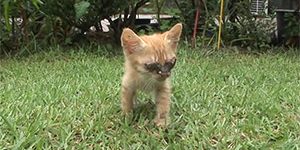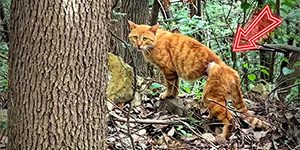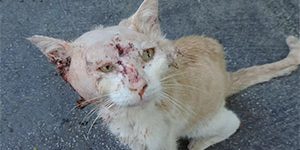
Beside an old, broken shelter on a patch of cold ground, a small cat lay quietly, almost invisible to the people passing by.
His name was Koksik.
For days, perhaps much longer, he remained in the same area, tucked beside an abandoned doghouse as though he had slowly become part of the forgotten landscape. His fur was dirty and matted, his body painfully thin, and his hind legs rested motionless behind him.
He couldn’t walk.
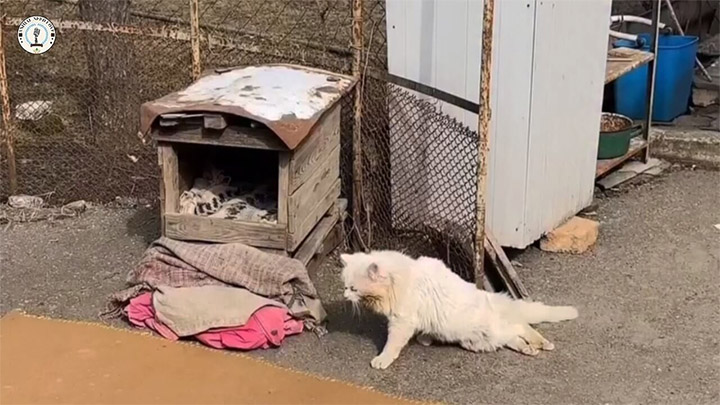
There was no way for him to run when someone approached, no easy way to search for food, and no ability to move himself to a warmer or safer place when the weather changed. Yet somehow, Koksik continued to stay there.
He waited.
Nobody knows exactly how long he had been living in those conditions or what caused his paralysis. For an animal with severe hind-leg weakness or paralysis, the underlying cause can range from spinal trauma and neurological disease to other serious medical problems, so a proper veterinary examination is essential before drawing conclusions.
What rescuers could see, however, was enough to know that Koksik urgently needed help.
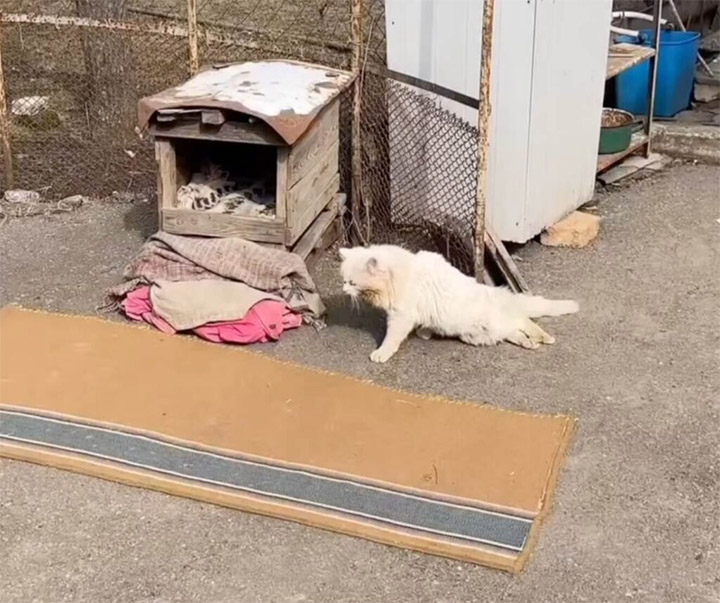
How Koksik was found | Rescue credit: instagram/crossman_vi_
When the rescue team finally approached him, they expected a frightened cat to try to escape. Instead, Koksik barely moved.
There was no frantic attempt to crawl away and no desperate struggle.
He simply watched them.
The rescuers noticed that he seemed exhausted rather than aggressive. When they reached toward him, he reacted only slightly, as though he had spent so long without help that he no longer expected anything to change.
That moment stayed with them.
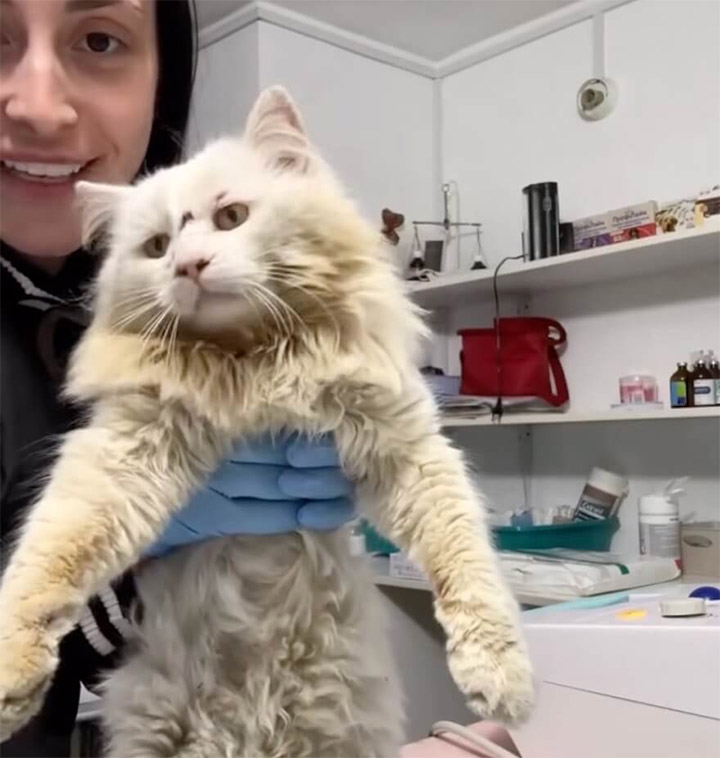
Koksik at the vet clinic
They carefully lifted him and took him for veterinary evaluation.
At the clinic, the severity of his condition became clearer. His hind legs were not functioning, and he had difficulty controlling some basic bodily functions. His appetite was inconsistent, and his strength appeared to fluctuate from one day to the next.
For a cat already weakened by life outdoors, paralysis creates a series of additional challenges. An animal that cannot move normally may struggle to reach food and water, maintain body cleanliness, avoid pressure-related injuries, and protect itself from environmental dangers. Depending on the cause, neurological damage may also require extensive diagnostics and long-term management.
Koksik’s future was uncertain.
There were difficult conversations about his condition and the limited possibilities ahead. But the rescue team made a decision that would change everything.
They would keep trying.
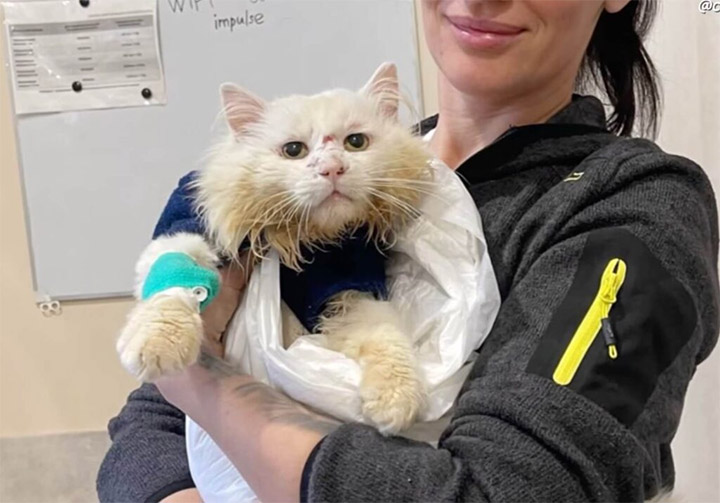
Koksik after his treatment
His recovery was not the kind that produces dramatic changes overnight. Much of it consisted of repetitive care that few people ever see: keeping him clean, monitoring his appetite, providing nutrition and fluids when necessary, protecting his skin, giving prescribed treatments, and making sure he remained as comfortable as possible.
There were days when Koksik barely ate.
There were mornings when his body seemed too tired to respond.
But there were also small signs that he was still fighting.
He began eating a little more. His weight slowly improved. His coat, once dull and tangled, started becoming softer as his nutritional condition improved. The distant look in his eyes gradually changed as well.
He began watching people more closely.
Then came something even more meaningful.
Trust.
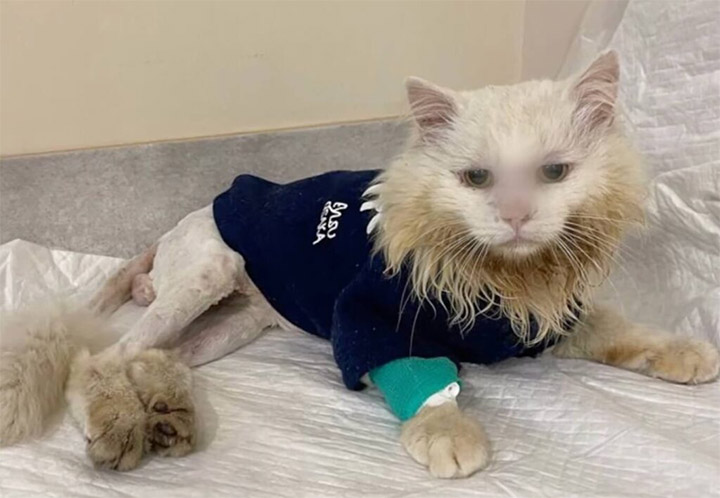
Koksik recovering
Koksik no longer looked at every human touch as something to fear. He began allowing his caregivers to move him without the same resistance. A small movement of his tail, a curious glance, or a quiet response became evidence that his personality was returning beneath the physical limitations.
When the initial treatment options were not enough, the rescue team arranged for him to receive additional care at another clinic in a different city. It required more time, more resources, and continued uncertainty, but they were unwilling to abandon him simply because his recovery would be difficult.
Eventually, Koksik found something even more important than medical treatment.
He found a home.
His new family did not look at him and see only a cat who could not use his hind legs. They saw the animal who had survived long enough to be found, endured intensive care, and slowly learned to trust again.
His new life became wonderfully ordinary.
There were warm blankets instead of cold ground, regular meals instead of uncertain scraps, and gentle hands instead of a world he had to face alone. He no longer needed to spend his days waiting beside an abandoned shelter, hoping someone might eventually notice him.
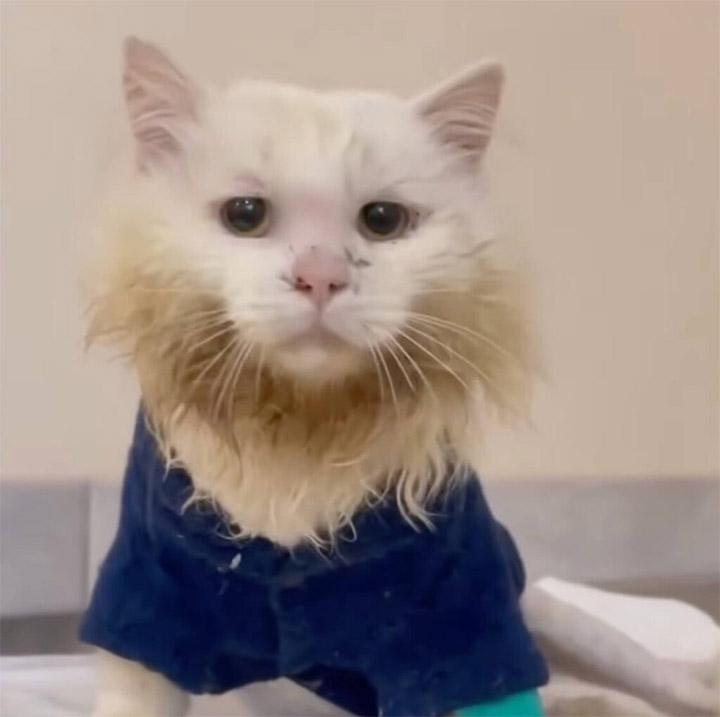
Koksik healing
His paralysis remained, but his life was no longer defined by it.
This is an important distinction when caring for disabled animals. Mobility is only one part of welfare. With appropriate veterinary guidance, environmental adaptations, hygiene support, pain management when needed, and attentive caregivers, many animals with permanent disabilities can still experience comfort, curiosity, companionship, and a meaningful quality of life.
Koksik’s story is therefore not simply about a cat who lost the ability to walk.
It is about a cat who nearly became invisible.
He had been lying quietly in one place, unable to chase help or make his suffering obvious. Yet someone eventually stopped, looked more closely, and decided that his life was worth the effort.
Today, Koksik no longer has to wait for someone to notice him.
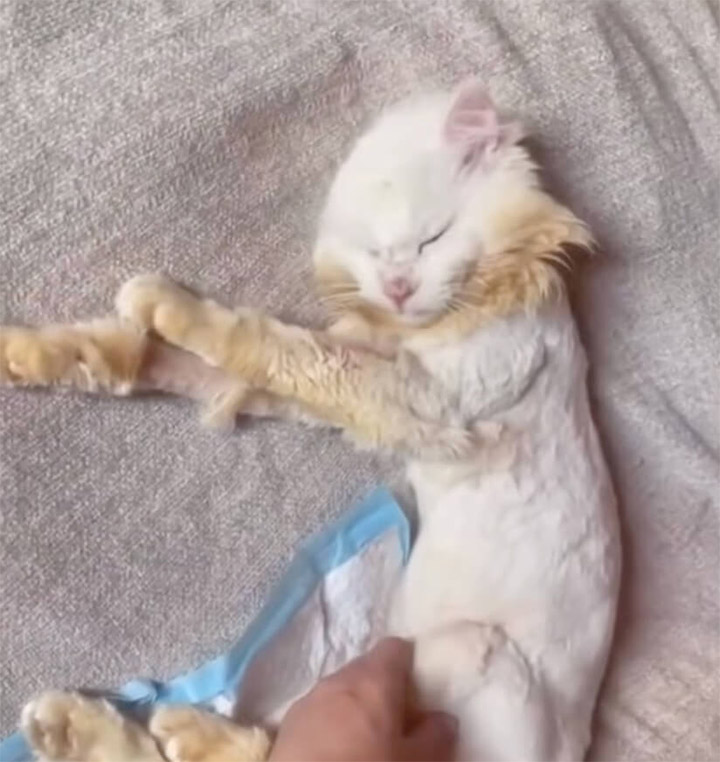
Koksik today
He is already seen.
He is cared for, protected, and loved, and every day he is given the chance to enjoy the things that matter far more than whether he can walk on four legs.
Sometimes, saving an animal does not mean restoring everything that was lost.
Sometimes, it means giving that animal a safe place to live with dignity, comfort, and companionship.
For Koksik, that was more than enough to begin again.