
At first glance, the orange Stray Cat appeared to be just another homeless animal searching for food along a quiet mountain road. There was nothing unusual about seeing a cat emerge cautiously from the bushes, pause beside the roadside, and disappear again into the surrounding forest.
Then the cat slowed down.
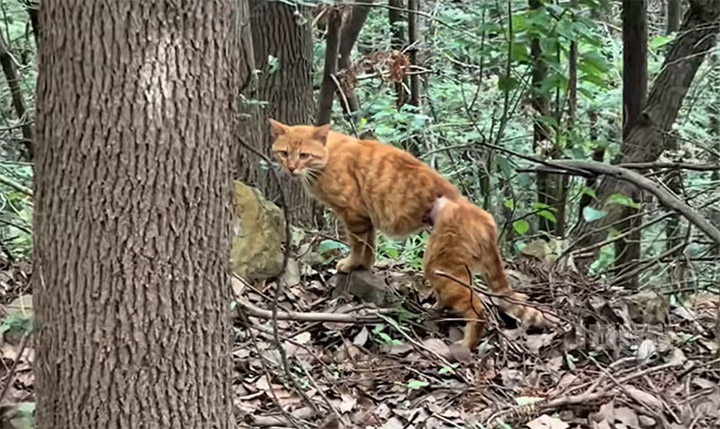
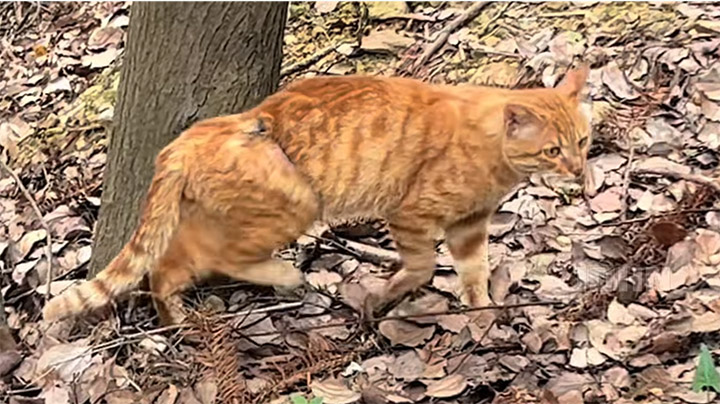
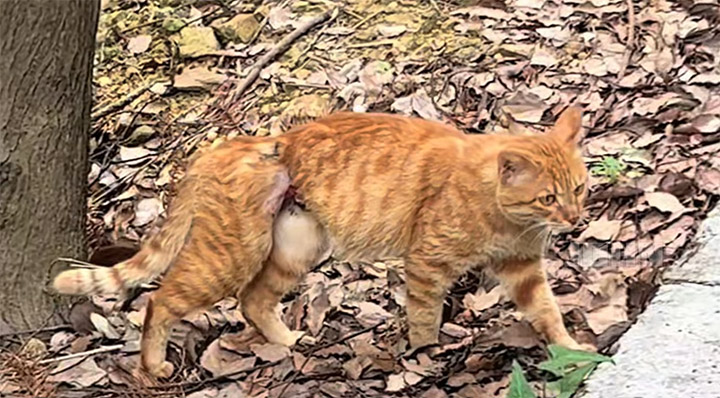
A closer look revealed something deeply concerning: a dark cord was wrapped around its body, cutting tightly into the skin around its waist. What initially looked like an ordinary encounter with a hungry stray suddenly became an urgent rescue.
The wound was already deep, and the cat moved with obvious discomfort. From an animal welfare perspective, an object that remains tightly constricted around a cat’s body can cause progressively worsening tissue damage, interfere with circulation, and create an opening for serious infection. The longer such an injury remains untreated, the greater the risk of permanent damage.
The challenge was that the cat did not understand that the people approaching it were trying to help.
Food was the first attempt.
Pieces of meat were placed on the ground, and eventually hunger overcame some of the cat’s fear. It cautiously approached and began eating, but the moment someone moved closer, its survival instincts took over. It scratched defensively and escaped toward the hillside.
There was no way to safely catch it by hand.
Instead of chasing the frightened animal, the rescuers changed their approach. They returned with proper equipment, including a net and a humane trap cage, while continuing to leave food and water in places where the cat felt relatively secure.
The rescue became a test of patience.
During the day, the cat would remain hidden among the bushes or retreat into the trees whenever it noticed movement. At one point, it watched cautiously from a branch above, refusing to come down while people were nearby. Every unexpected sound sent it running back into the forest.
As darkness approached, the chances of getting close seemed to disappear with the fading light.
But the rescuers kept returning.
They learned where the cat liked to rest, where it appeared to search for food, and how close they could approach before it became frightened. Rather than forcing contact, they allowed the animal to set the pace whenever possible.
Eventually, a trap cage was positioned along its usual route, carefully baited with food.
The cat approached.
It hesitated.
Then, after enough time had passed and the surroundings became quiet, it finally entered.
The moment the trap closed, the rescue team moved quickly. The cat was taken to a veterinary hospital, where the severe wound around its waist could finally be examined properly.
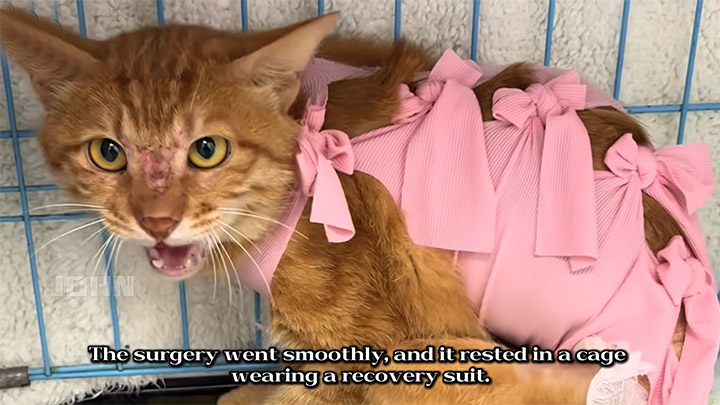
Surgery was performed to address the damaged tissue and remove the constricting material. Afterward, the exhausted cat rested safely inside a recovery cage, wearing a protective suit while the wound began to heal.
For the first few days, trust was still far away.
The cat remained cautious and defensive, which was understandable given what it had experienced. Painful medical treatment can make an already frightened animal even more suspicious of human contact. Yet with predictable routines, gentle handling, and consistent care, its behavior gradually began to change.
One day, it started meowing when its caregiver approached.
It was a small moment, but it represented a major step forward.
Over the following weeks, the cat’s appetite returned. Its body slowly regained weight, while healthy fur began growing back around the healing wound. After roughly a month, the difference was striking. The once-fragile stray was becoming energetic again, and the painful indentation around its waist was gradually fading.
Eventually, it was ready to leave the clinic and continue recovering in a safe home environment.
The transition was not completely easy.
During daily wound care, the cat still struggled and sometimes fought desperately to escape. But its caregiver never responded with force or anger. The routine remained calm and consistent, giving the animal time to understand that the hands caring for it were no longer a threat.
Little by little, the walls came down.
Once the wound had healed, the cat was allowed to explore the yard. It climbed, jumped, investigated every corner, and rediscovered the physical confidence that had been missing during its illness. Its ability to leap onto high walls became an unexpected sign of just how much strength it had regained.
It also began interacting with other rescued cats.
Instead of avoiding them, the orange cat became remarkably gentle with younger kittens, sometimes following them around the yard as though quietly keeping watch over them. It could stretch out in the sunshine, roll onto its back for attention, or simply sit nearby and enjoy the safety of its surroundings.
Some traces of fear remained.
At unfamiliar sounds, it could still disappear beneath a car or retreat to a high resting place where strangers could not easily reach it. Such behavior is not unusual for an animal that has spent a long time surviving without security. Recovery is not always about eliminating every fearful response; sometimes it means giving an animal enough safety that fear no longer controls its entire life.
And eventually, something even more meaningful happened.
Whenever the cat saw its rescuer, it began walking over to greet them.
The same animal that once scratched and fled at the slightest approach now rubbed against familiar legs, waited for food, and willingly accepted affection. The transformation was not simply physical. It was the gradual rebuilding of trust.
The scars around its body may remain as reminders of a painful past, but they no longer define this cat.
Today, it has food, space to explore, feline companions, and people it can trust. It can climb trees, chase other cats, stretch beneath the sun, and move freely without carrying that cruel restriction around its body.
For a Stray Cat once trapped by fear and an embedded cord, freedom did not arrive all at once. It came through small meals, quiet waiting, veterinary care, painful treatments, and countless moments when someone chose patience instead of giving up.
Sometimes, saving an animal is not about one dramatic act.
It is about staying long enough for that animal to believe that life can finally be safe again.
Watch the video below:


