
The first time Dobby appeared at the door, he did not look like a kitten who had simply wandered in looking for adventure. He was tiny, frightened, dirty, and painfully thin, with a body that suggested he had been struggling to find enough food for quite some time. He ran inside as though he had finally discovered somewhere he might be safe, and although no one could know exactly what he was trying to say, his behavior seemed to communicate one simple message: he needed help.
Perhaps he was hungry. Perhaps he was frightened. Most likely, he was both.
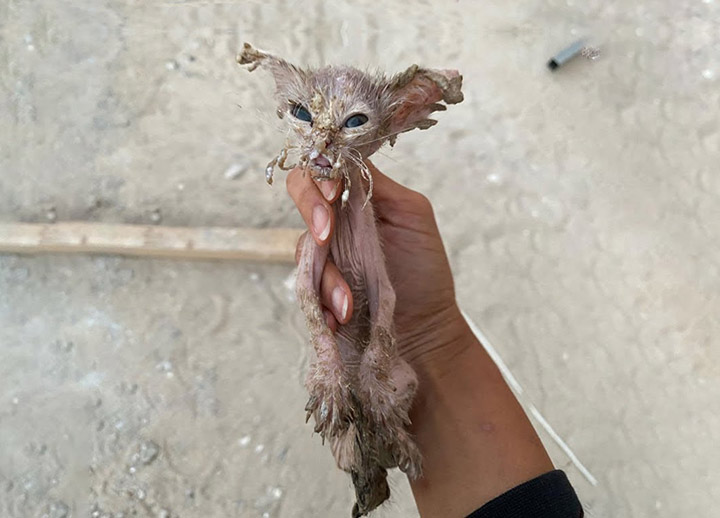
Looking at Dobby’s condition, his rescuers suspected that his early life had been anything but easy. His coat was dirty and covered with sticky material, while his frail body had very little reserve left. For a growing kitten, prolonged malnutrition can be especially concerning because young animals require sufficient calories, protein, fluids, and essential nutrients to support development and maintain a functioning immune system.
So Dobby was welcomed inside, and a long recovery began.
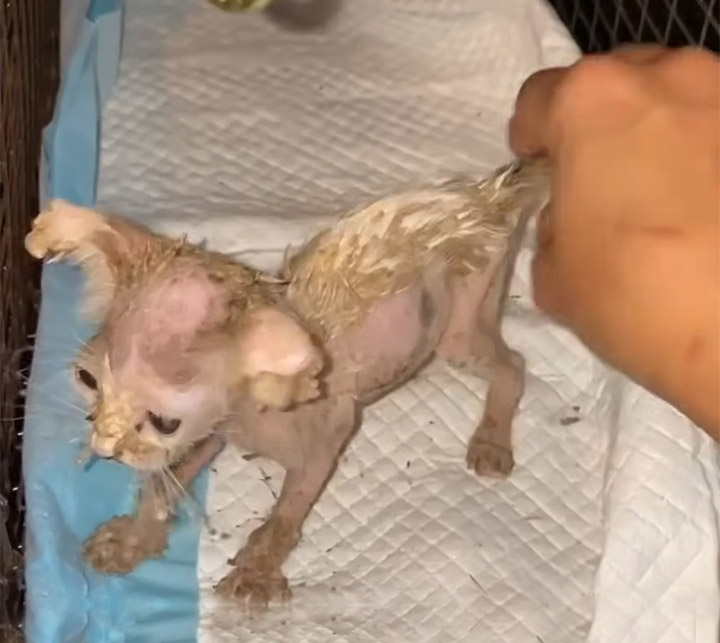
During his first days, even basic care became something new. On the second day, he received a warm bath to remove the dirt and sticky material from his coat. Beneath the mess was an extremely malnourished kitten who needed much more than a clean appearance. He needed patience, nourishment, veterinary attention, and a quiet environment where his body could begin rebuilding itself.
He also needed to learn that human hands could be gentle.
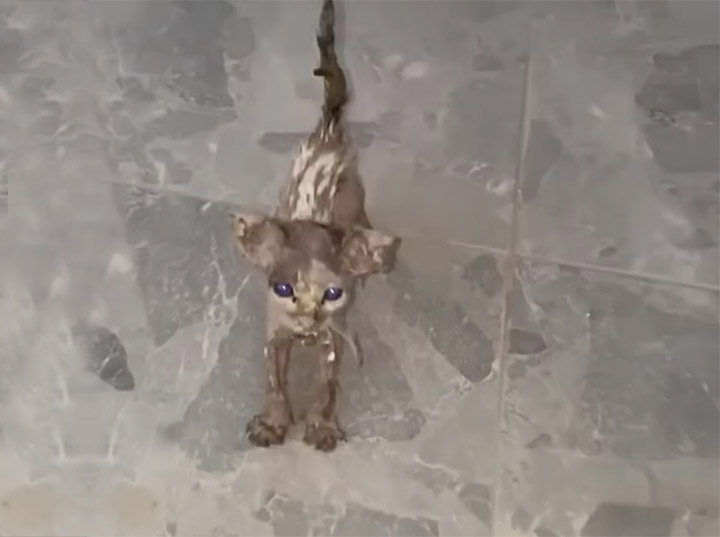
Dobby was given affection whenever he was comfortable with it, along with nutritious food and milk. For a kitten who had apparently spent so much time worrying about where his next meal would come from, having food placed in front of him regularly was an important part of establishing a sense of security.
The changes did not happen overnight.
By the fifth day, another bath had made an astonishing difference to his appearance, but the more important progress was happening underneath his fur. His caregivers continued monitoring him closely, providing vitamins and supportive care, including subcutaneous fluids when needed. They watched his appetite, energy, and general behavior for signs that his fragile body was beginning to respond.
Then came small pieces of encouraging news.
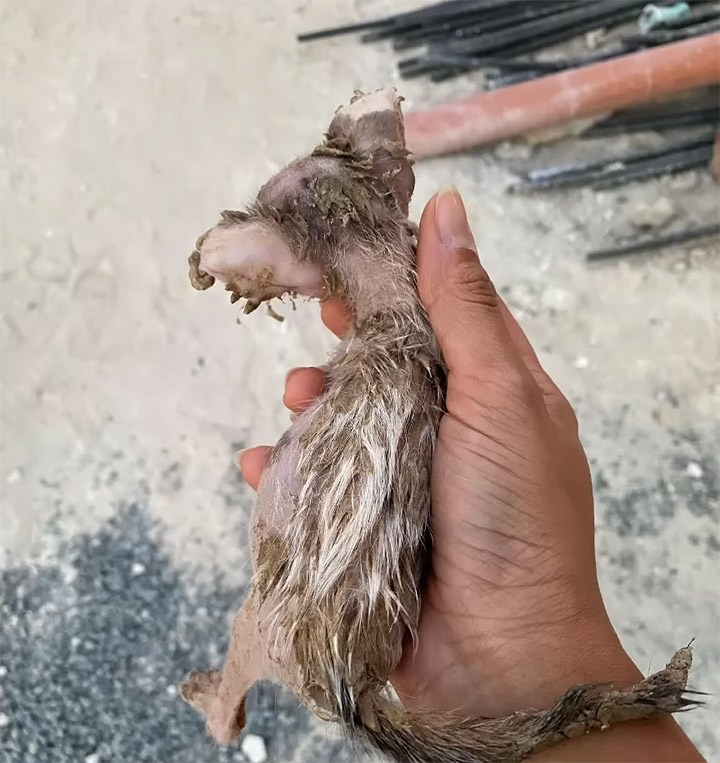
Dobby was eating.
One morning, he had finished most of his food, and his caregivers recognized it as a promising sign. He still had a long way to go, but a kitten who begins eating consistently is already taking an important step toward recovery.
By the second and third weeks, mealtimes had become something Dobby looked forward to rather than something he had to desperately search for.
He became excited when food arrived. He was using his litter box. He was becoming stronger.
These ordinary behaviors may not seem remarkable when seen in a healthy household cat, but for a severely undernourished kitten, they can represent meaningful milestones. Recovery is often built from exactly these small improvements: eating reliably, gaining weight gradually, becoming more active, and developing enough confidence to interact with the people and environment around them.
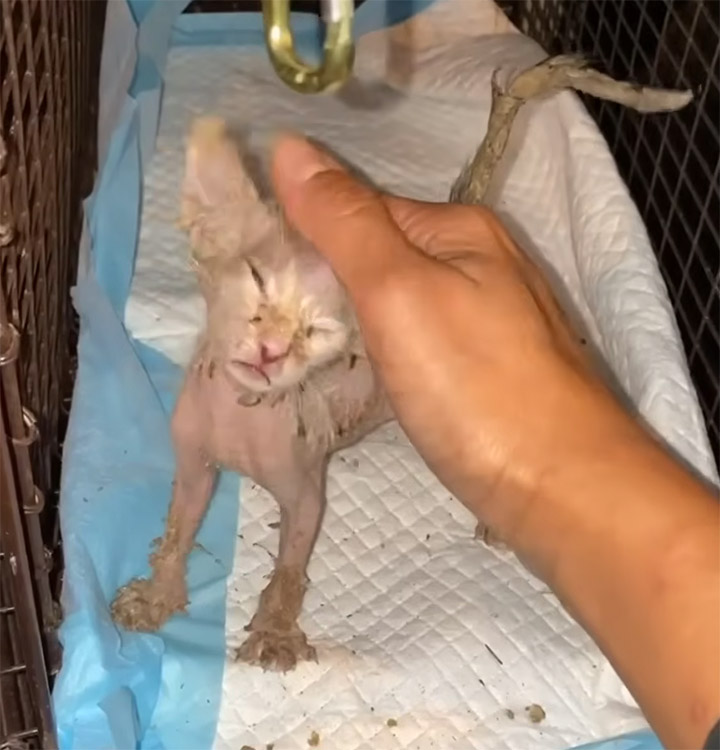
By Day 32, Dobby’s appetite was good, and he was visibly putting on weight.
His personality was beginning to emerge as well.
One morning, his caregiver intended to clean his enclosure before bringing his breakfast. When they turned around, they found Dobby waiting impatiently for his meal, apparently unwilling to waste another moment wondering when breakfast would arrive.
The kitten who had once appeared desperate and frightened was developing an entirely different attitude.
He knew there would be food.
He simply wanted it now.
Over the following weeks, Dobby continued to grow. By around Day 60, his caregivers could jokingly call him a little troublemaker, but the humor itself revealed how much had changed. He was no longer simply an animal whose health required constant concern. He was becoming a playful young cat with enough confidence to show his own personality.
By Day 85, Dobby was growing every day. He could be stubborn, mischievous, and occasionally dramatic, even appearing to play the victim after getting into trouble with the other cats. He enjoyed chasing toys, including a simple plastic stick, and gradually became comfortable enough to join in games with his feline companions.
One particularly memorable friendship developed between Dobby and another cat named Misha, with the two engaging in playful wrestling matches that would have been difficult to imagine during Dobby’s earliest days.
Then came Day 300.
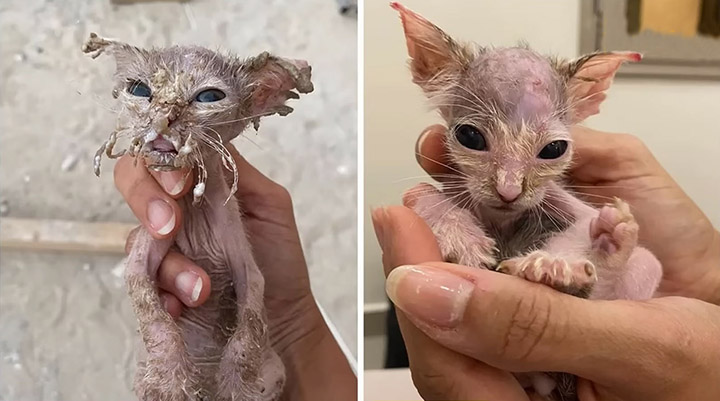
The fragile little kitten who had once rushed through a doorway looking for food had grown into a confident cat who seemed completely at home. Rather than hiding or worrying about his next meal, Dobby had become one of the personalities of the household, even earning the playful title of its little leader.
His transformation was not just about gaining weight or growing a healthier coat.
It was about gaining a sense of belonging.
From an animal-care perspective, Dobby’s journey illustrates why patience matters when caring for a severely undernourished kitten. Physical recovery requires appropriate nutrition and monitoring, but emotional recovery also develops through consistency. When food arrives reliably, when sleeping spaces remain safe, and when human interactions are gentle and predictable, an anxious animal can gradually learn that it no longer needs to live in survival mode.
Dobby’s first message at the door may have been nothing more complicated than hunger.
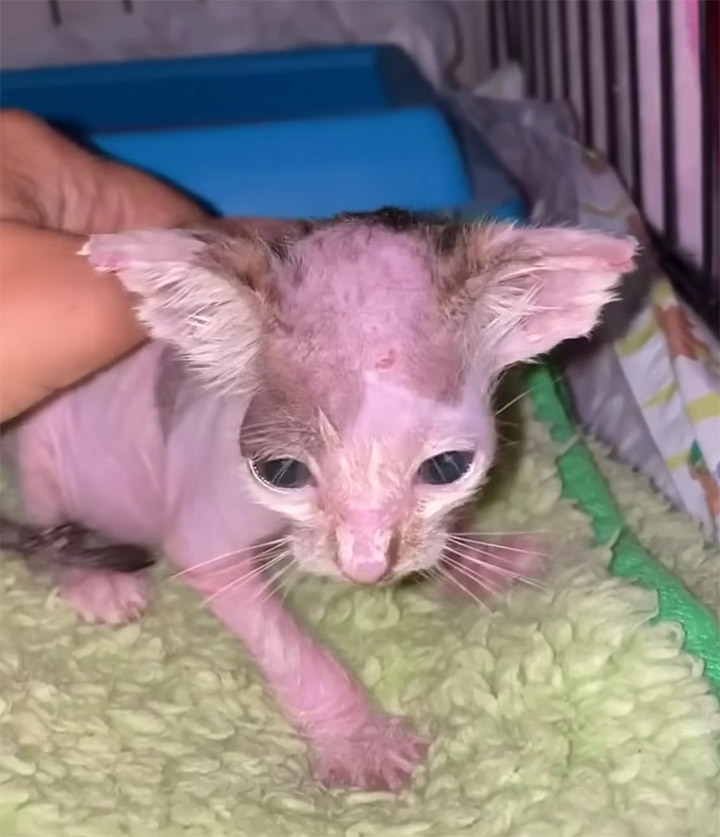
But someone listened.
They gave him food, warmth, medical support, affection, and time. In return, Dobby gave them something unexpected: the chance to watch a frightened, skinny kitten become a confident, playful, and deeply loved member of the family.
Three hundred days later, the kitten who once came asking for help was no longer wondering whether he would have enough to eat.
He was busy deciding which toy to destroy, which cat to wrestle, and where he would take his rightful place as the little leader of the house.
And perhaps that is the most beautiful part of Dobby’s transformation—not that he simply survived, but that he finally had the freedom to become the mischievous, affectionate cat he was always meant to be.
Watch the video below:


