
There are some cries that are easy to dismiss as part of the ordinary sounds of a neighborhood, especially when they come from behind a closed door or an old, neglected house. But every once in a while, a sound carries something different—a sense of fear, pain, and desperation that makes it impossible for a compassionate person to simply keep walking. That was what happened when rescuers passing an aging property heard the faint cries of a cat coming from inside. The sound was weak, but there was something unmistakably urgent about it, as though an animal had been calling for help for far longer than anyone realized.
That cat was Whiskers.
His life before the rescue had been filled with suffering. The person who should have protected him had instead subjected him to repeated cruelty, leaving him exposed to hunger, neglect, and physical abuse. Over time, the consequences became painfully visible. His once-soft coat had become tangled and dirty, his body had lost much of its healthy weight, and his movements reflected the exhaustion of an animal that had been forced to survive without adequate food or care.
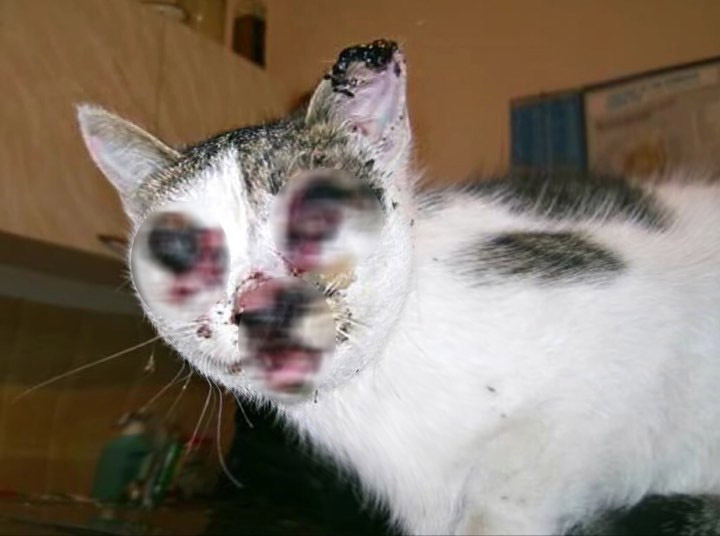
Yet the most heartbreaking part was his expression.
Whiskers looked frightened, but there was still a small spark of awareness in his eyes, a quiet indication that somewhere beneath the fear and exhaustion, he had not completely surrendered. Animals experiencing prolonged abuse often learn to become extremely cautious around humans. They may hide, freeze, or instinctively recoil from an approaching hand because their previous experiences have taught them that human contact can bring pain rather than comfort. Whiskers appeared to have learned exactly that lesson, and yet he was still crying out.
Perhaps, on some level, he was hoping that someone would listen.
The rescuers could not ignore him.
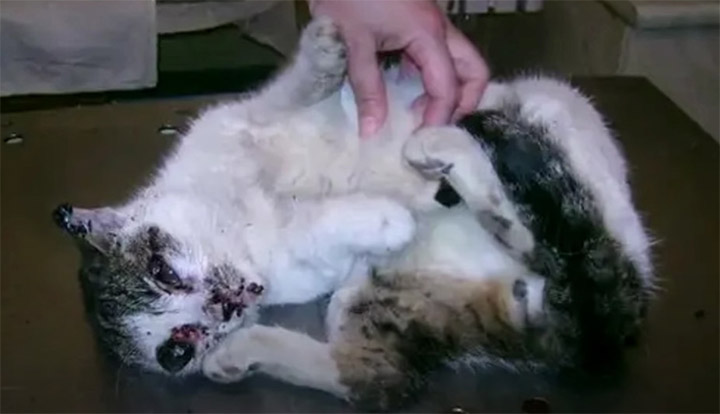
They followed the sound toward the rundown house and discovered that the cries were coming from inside. What they encountered was deeply disturbing. Whiskers was in terrible condition, so weak that standing appeared to require more energy than his exhausted body could spare. His coat concealed part of the damage, but beneath the dirt and tangled fur were scars and injuries that suggested he had endured suffering for a considerable period of time.
For the rescuers, there was no question about what needed to happen next.
Emergency help was called, and arrangements were made to get Whiskers out of the environment where he had been suffering. Removing an abused animal from a dangerous situation requires more than simply carrying it away. The animal may be frightened, confused, and physically unstable, which means every movement must be handled carefully. In Whiskers’ case, his condition made professional veterinary assessment particularly urgent.
Once he was transported to the clinic, the veterinary team began examining him from head to tail. They treated his visible injuries while also looking for the hidden consequences of prolonged neglect, including dehydration, malnutrition, infection, anemia, and other complications that can develop when an animal has been deprived of proper care for an extended period.
The first priority was stabilization.
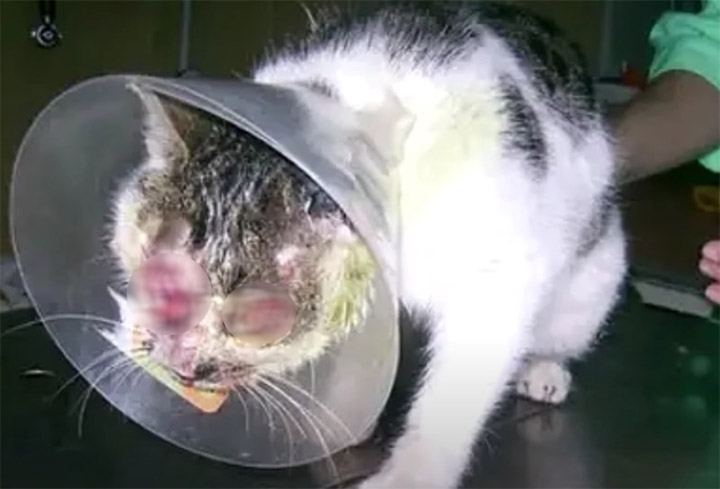
Whiskers needed food, fluids, medical treatment, warmth, and somewhere quiet where his exhausted body could finally rest. However, feeding a severely malnourished animal also requires caution. When a cat has gone without adequate nutrition for too long, suddenly providing large amounts of food can create serious metabolic complications. Veterinary teams therefore carefully manage nutritional recovery, gradually restoring the body’s resources while monitoring the patient’s response.
For Whiskers, every meal became part of the healing process.
So did every peaceful night.
So did every gentle touch.
For perhaps the first time in his life, nobody was hurting him.
The people around him approached slowly, spoke softly, and handled him with patience. There was no shouting, no violence, and no reason to hide. Instead, Whiskers discovered something completely unfamiliar: human hands could bring comfort.
At first, trust did not come easily.
He would tense whenever someone reached toward him, instinctively preparing for something painful. He sometimes remained curled tightly against himself, watching every movement around him. From an animal behavior perspective, such reactions are completely understandable. Fear learned through repeated trauma does not disappear simply because the animal has been removed from danger. The nervous system needs time to recognize that circumstances have changed.
The veterinary staff understood that recovery would therefore need to happen on two levels.
They had to heal Whiskers’ body while patiently rebuilding his confidence.
There were no shortcuts.
Day by day, they continued offering him the things he had been denied for so long. Clean bedding replaced dirty surroundings. Regular meals replaced hunger. Medical treatment replaced untreated wounds. Gentle voices replaced frightening noises, and patient companionship gradually replaced the loneliness that had defined so much of his existence.
Then, slowly, Whiskers began changing.
His appetite improved.
His body became stronger.
His coat started to recover as he received proper nutrition and regular care.
But the most meaningful changes were emotional.
One day, he stopped immediately flinching when a caregiver reached toward him. Instead of shrinking away, he allowed the hand to remain beside him. Later, he began accepting gentle strokes. Eventually, he started seeking them.
For rescuers and veterinary professionals, these moments can be more emotional than any improvement shown on a medical chart. A wound closing is wonderful, but watching an abused animal choose to trust again is something entirely different. It means the animal is beginning to understand that the world is no longer the place it once believed it was.
Whiskers discovered this lesson gradually.
He learned that a person approaching his bed might bring food.
He learned that a hand could scratch gently behind his ears.
He learned that falling asleep did not mean waking up to another frightening experience.
And eventually, he learned how to purr.
That first peaceful purr carried a significance far beyond the sound itself. It was a small expression of comfort from an animal who had spent so much of his life living in fear. It showed that somewhere beneath the scars, Whiskers’ ability to feel affection had survived.
As his physical condition improved, his personality began emerging as well.
The frightened cat who had once been too weak to stand became increasingly curious about his surroundings. He began watching people with interest instead of fear, and his movements became more confident. His eyes, once dull from exhaustion, gradually regained their brightness.
The transformation was remarkable.
But perhaps the most beautiful part of Whiskers’ story came after his medical recovery.
He found a home.
Instead of returning to the life he had known, Whiskers was given a safe environment where his past could remain behind him. His new family understood that he might need patience and reassurance, but they also saw something that had been hidden beneath all the suffering: a loving cat who simply needed an opportunity to feel safe.
In his new home, Whiskers began discovering ordinary pleasures that had once been impossible for him to imagine. He had comfortable places to sleep, nutritious food waiting for him, toys to explore, and people who genuinely wanted him nearby. More importantly, he no longer had to wonder where his next meal would come from or whether the next human approaching him would cause pain.
His life became quiet.
And for Whiskers, quiet was beautiful.
Today, it can be difficult to recognize the cat from the rescue photographs in the happy animal who now enjoys the security of a loving home. His body has grown stronger, his coat has improved, and his eyes now carry something that was almost absent when he was first discovered.
Peace.
Whiskers’ story is a reminder that animals do not need to understand why they have been mistreated in order to deserve rescue. They cannot explain their pain in words, report their suffering, or ask for help in the way humans can. Sometimes all they can do is cry from behind a door and hope that somebody hears them.
Fortunately, someone did.
One decision to stop and investigate transformed the course of Whiskers’ life. Without that intervention, his story might have ended in the same place where his suffering began. Instead, he was given medical care, patience, safety, and the opportunity to become the cat he had always been capable of becoming.
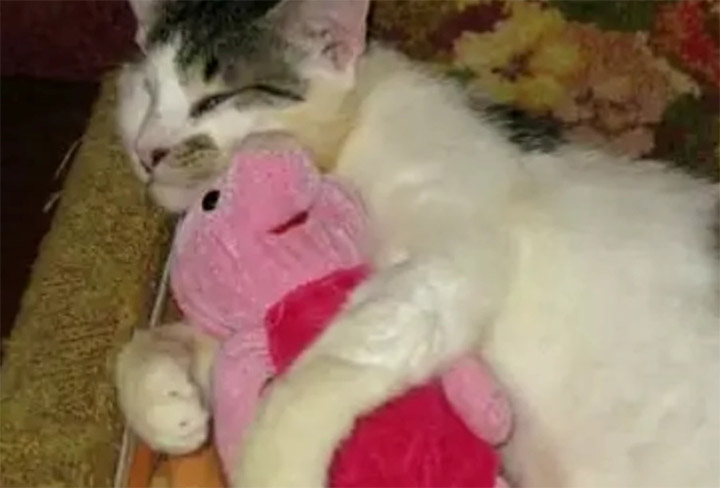
His scars may remain as reminders of what he endured, but they no longer represent his future.
Whiskers is no longer defined by cruelty.
He is defined by survival.
He is defined by trust.
And most importantly, he is defined by the love he finally found.
His journey reminds us that compassion does not have to begin with something extraordinary. Sometimes it begins with simply paying attention when something feels wrong, refusing to ignore a frightened cry, and being willing to step toward suffering instead of walking away from it.
For Whiskers, someone finally listened.
And because they did, a life that had once been filled with fear was given the chance to become something completely different—a life filled with warmth, dignity, affection, and the peaceful sound of a cat who finally knows he is safe.


