
When people imagine a cat waiting for a forever home, they often picture a tiny kitten with bright eyes, soft fur, and endless energy. Older cats are much easier to overlook, especially when they arrive at a rescue in poor physical condition. But Raggedy Ann’s story is a powerful reminder that age does not make a life less valuable, and that even a senior animal who appears completely broken can still have years of love waiting ahead.
At 14 years old, Raggedy Ann had already lived through more hardship than any animal should have experienced. By the time rescuers found her in Chandler, Arizona, she was living inside a crowded mobile home alongside roughly 40 other cats and two dogs. The animals were reportedly suffering from severe neglect, and the conditions had become so overwhelming that intervention was urgently needed.
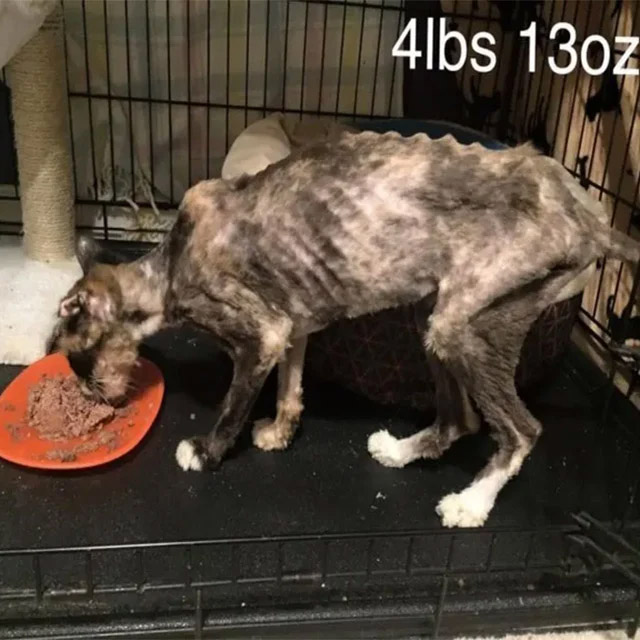
Among all those animals, Raggedy Ann was one of the cats who immediately raised concern.
She was painfully thin, weighing less than five pounds, and her fragile body was so small that she could easily have been mistaken for a much younger kitten. Her coat and overall condition reflected the prolonged lack of proper care, but her greatest difficulty was hidden inside her mouth.
Ann had lost most of her teeth.
Only seven remained, and those teeth were badly decayed. For an elderly cat already weakened by malnutrition, eating had become an exhausting and painful task. Every meal should be something an animal can approach with comfort and anticipation, yet for Ann, food had become associated with discomfort.
Her rescuers worried that she might not survive.
It is difficult to imagine what her final months or years might have looked like if nobody had intervened. A 14-year-old cat living in such conditions had very little protection against illness, malnutrition, infection, or the complications that come with advanced age. Senior cats also tend to have more delicate nutritional and medical needs, meaning that prolonged neglect can affect them particularly severely.
Fortunately, Ann’s story did not end in that mobile home.
The Humane Society team shared her situation in the hope that another rescue organization would step forward. That appeal eventually reached Saving One Life, a rescue group willing to take responsibility for the fragile senior cat.
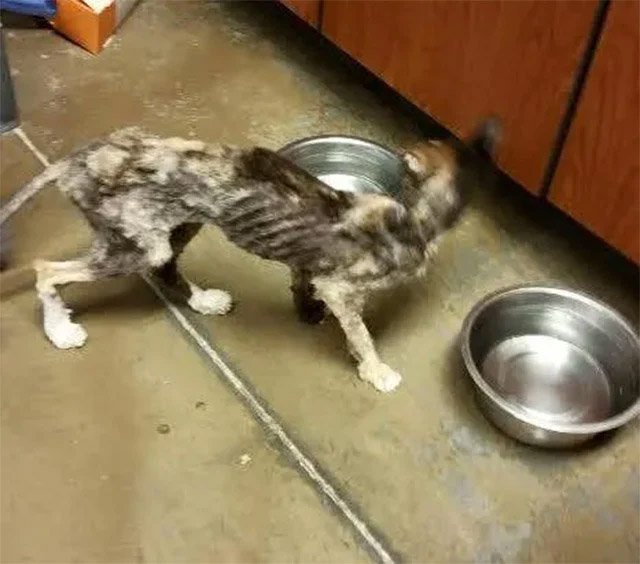
For Ann, it was the beginning of a completely different chapter.
Her condition was heartbreaking, but the rescuers did not look at her and see an old cat who had already had her chance. They saw an animal who was still capable of experiencing comfort, affection, and happiness.
That distinction changed everything.
Ann was taken into care and placed with people who understood that recovery would not happen overnight. Her body had been deprived for too long, and she needed more than food and a safe place to sleep. She needed veterinary treatment, careful nutrition, pain relief, patience, and most importantly, someone willing to remain beside her while she slowly learned what safety felt like.
One of the first major steps was addressing her painful dental disease.
Dental problems can be particularly serious in cats because they may continue eating despite significant discomfort, making it easy for their suffering to go unnoticed. A cat with severe oral disease may gradually eat less, lose weight, become reluctant to chew, or develop other health complications. For an animal as underweight as Ann, relieving that pain was an essential part of giving her body a chance to recover.
After dental surgery, Ann was finally able to begin her new life without the constant burden of diseased teeth.
Her caregivers also provided nourishing meals suited to her condition, along with a warm, comfortable bed where she could rest without worrying about competition or danger.
At first, Ann remained understandably cautious.
After years of living in an overcrowded and neglected environment, she had every reason to be uncertain about people and her surroundings. Trust is not something that can be demanded from an animal. It has to be earned through consistency, gentle handling, predictable routines, and countless small moments in which the animal discovers that nothing bad happens.
That was exactly what Ann received.
Her caregivers did not rush her.
They allowed her to move at her own pace while quietly showing her that she was safe.
Then, little by little, something beautiful began to happen.
Ann started to change.
The frail senior cat who had once appeared almost completely defeated began showing small flashes of personality. She became more interested in what was happening around her. She started interacting with the people caring for her and gradually allowed herself to relax in their presence.
Then came the sound her rescuers had been waiting for.
A purr.
For a cat who had spent so long surviving rather than living, that gentle vibration meant far more than simple contentment. It was a sign that Ann was beginning to feel safe enough to enjoy her surroundings.
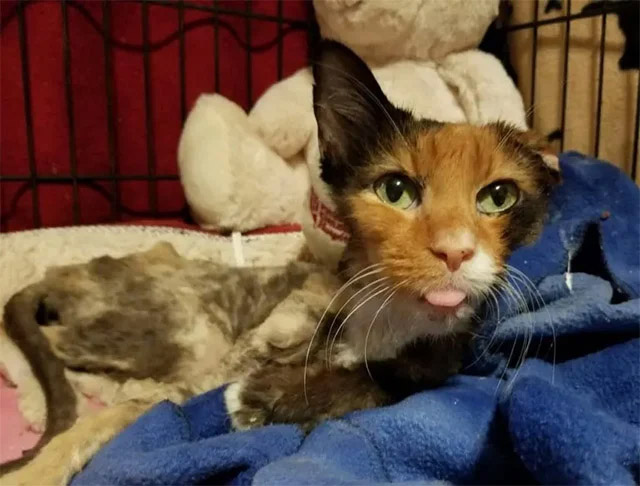
Her playful side also started to emerge.
It was almost as though the caregivers were meeting a completely different cat from the one who had first arrived. Beneath the tangled coat, frail body, and tired expression was a personality that had been waiting for the opportunity to come alive.
Ann began playing.
She became affectionate.
She showed curiosity toward other animals.
And she started behaving less like a frightened survivor and more like a beloved companion.
Perhaps the most astonishing part of her transformation was what happened to her weight.
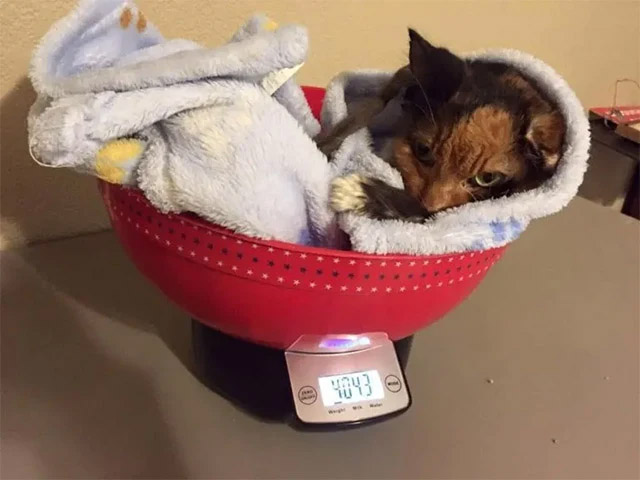
With proper nutrition, veterinary treatment, and consistent care, Ann gradually became stronger and healthier. Her body filled out, her energy increased, and she no longer looked like the tiny, malnourished cat who had arrived weighing less than five pounds.
Eventually, she had more than tripled her weight.
The physical transformation was extraordinary, but her emotional transformation was even more meaningful.
Ann had gone from living in a crowded environment where her basic needs were not being met to having a soft bed, regular meals, medical attention, affection, and people who genuinely cared whether she was comfortable.
And then came the moment every rescue hopes for.
Ann was adopted.
Someone saw beyond her age.
They saw beyond her difficult history and the physical condition in which she had been discovered. Instead, they saw the affectionate, playful cat that had emerged once she was finally given the opportunity to heal.
For Ann, the concept of a “forever home” was no longer an abstract promise.
It was real.
Her story carries an important lesson for anyone considering adoption. Kittens certainly need homes, but senior cats need them just as desperately. Older animals are often passed over because potential adopters worry that they will have less time together or may require more medical care. Those concerns can be understandable, but they can also cause people to overlook some of the most loving companions waiting in shelters and rescue organizations.
Senior cats often have personalities that are already well developed. Once they feel safe, many can become incredibly affectionate and deeply bonded with their caregivers. They may not have the endless energy of a kitten, but they can bring a quieter kind of companionship into a home.
Raggedy Ann demonstrated that beautifully.
At 14, she was not finished with life.
She was simply waiting for someone to give her the opportunity to live it differently.
Her rescue also highlights a much larger issue: animal hoarding and neglect. When too many animals are kept in inadequate conditions without sufficient resources to provide proper food, sanitation, veterinary care, and shelter, the consequences can become devastating. The animals themselves are often the ones who suffer most, even though they have no control over the circumstances surrounding them.
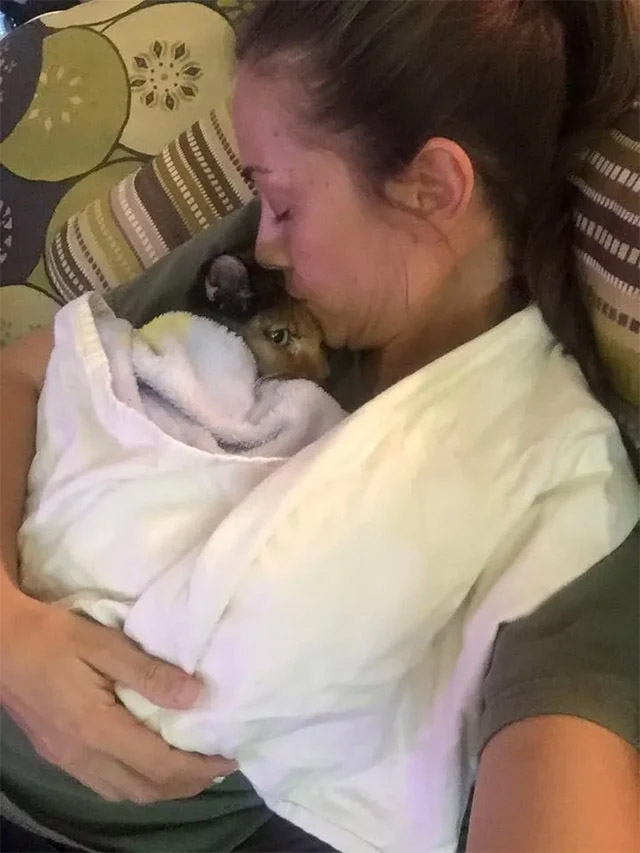
Ann was fortunate because someone noticed.
Someone spoke up.
A rescue organization answered.
A foster caregiver opened a home.
Veterinarians treated her pain.
And a family eventually decided that an elderly cat deserved to be loved for the rest of her life.
Every part of that chain mattered.
Remove one link, and her future could have looked very different.
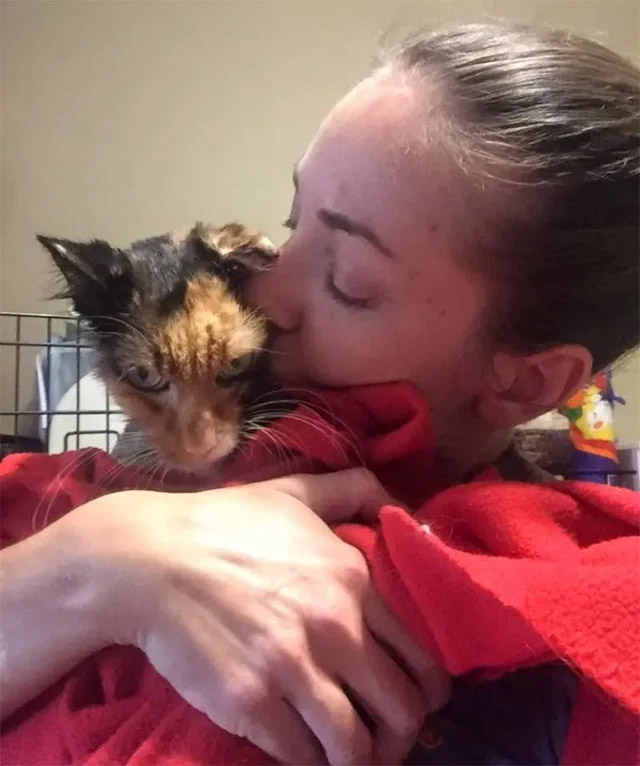
Today, Raggedy Ann’s past does not define her.
The five-pound body has been replaced by a healthier one. The painful mouth has been treated. The frightened expression has given way to curiosity and affection. Instead of struggling simply to survive another day, she has been given the chance to enjoy ordinary things that every cat deserves: a comfortable place to sleep, a satisfying meal, gentle human attention, and the security of knowing that she is finally home.
Her transformation is more than a before-and-after story.
It is proof that rescue does not always mean saving an animal from an immediate physical danger. Sometimes rescue means giving an animal back the dignity that neglect has taken away. It means treating pain, restoring nutrition, rebuilding trust, and giving an overlooked life the chance to become joyful again.
Raggedy Ann was 14 years old when someone finally saw how desperately she needed help.
But instead of treating her age as a reason to give up, her rescuers treated it as a reason to care even more.
And perhaps that is the most beautiful lesson she leaves behind.
A life does not become less worthy simply because it has grown older.
Ann had spent years being overlooked, but she only needed one opportunity to show the world who she really was. Once given food, comfort, medical care, and love, she did not simply survive.
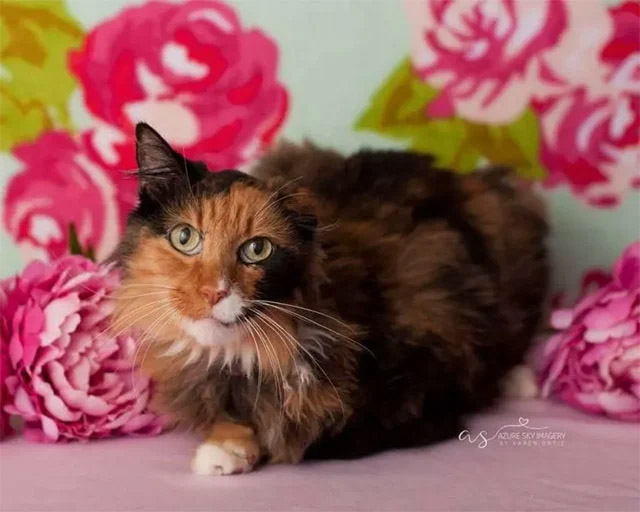
She blossomed.
Her story reminds us that behind every frightened face in a shelter may be a personality waiting to emerge, and behind every senior animal may be a lifetime of affection still waiting to be shared.
Raggedy Ann’s greatest transformation was never the number on the scale.
It was the moment she finally stopped living like a forgotten animal and started living like someone’s cherished companion.
At 14 years old, her life was given a new beginning.
And sometimes, the most beautiful beginnings arrive much later than we expect.


