
Some of the most meaningful encounters with animals happen when we least expect them. There are no dramatic rescue teams, no warning signs, and sometimes not even a clear explanation of how the animal ended up in danger. There is simply a sound that catches someone’s attention at exactly the right moment, followed by a decision that can change the course of a fragile life. For one worker at a quiet warehouse, that life-changing moment began with a faint cry that was almost impossible to hear.
He was going about his usual workday when something stopped him in his tracks. Beneath the ordinary sounds of the warehouse, he heard what seemed to be a tiny animal crying somewhere nearby. At first, the sound was so faint that he wondered whether he had imagined it, but there was something strangely urgent about it that made him stop what he was doing and listen carefully. When the cry came again, he followed it toward the source and soon discovered a sight that immediately broke his heart.
A tiny kitten was trapped inside a drainage opening.
Only its small head and part of its fragile body were visible, while the rest of it was wedged tightly into the narrow space. The kitten was trembling uncontrollably, frightened by the unfamiliar surroundings and exhausted from struggling to free itself. Its little paws scraped desperately against the cold ground, but every attempt only seemed to make the situation worse. Its eyes were wide with fear, and when they met the man’s gaze, there was an unmistakable desperation in them.
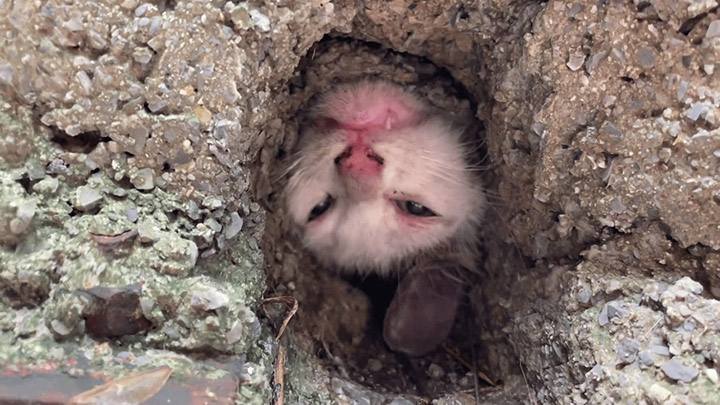
The kitten could not understand his words, but its expression seemed to ask a simple question: Are you here to help me?
He immediately crouched beside the opening and tried to free the animal with his hands. He carefully adjusted the kitten’s position, attempting to determine exactly where its body was stuck, but the opening was simply too narrow. Pulling harder was not an option because the kitten was so small and vulnerable that even a little unnecessary force could cause serious injury.
The more the man tried, the more frightened the kitten became.
Its tiny body shook beneath his hands, and its paws continued scratching against the pavement as it struggled to escape. The man realized that this was not a situation he could solve through strength alone. He needed tools, patience, and a plan that would allow him to widen the opening without harming the frightened animal trapped inside.
Leaving the kitten there was the last thing he wanted to do, but he knew that rushing home to collect the necessary equipment was the safest choice. Before leaving, he made sure the kitten was still breathing comfortably and tried to keep it calm by speaking softly. Then he hurried home, already worrying about what might happen during the few minutes he would be away.
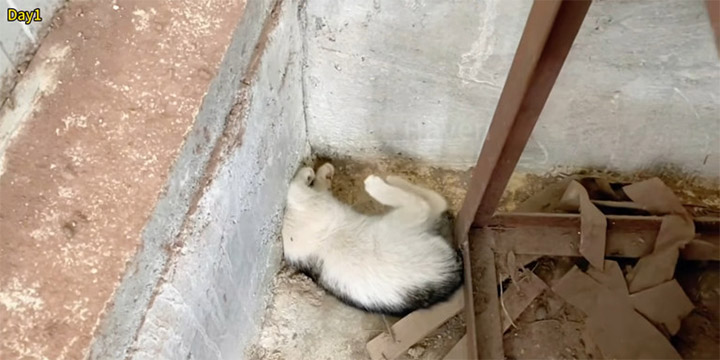
When he returned, he brought the tools he needed and immediately went back to work.
The rescue became a slow and delicate process. He carefully chipped away at the rigid edges surrounding the drainage hole, removing small pieces at a time rather than attempting to force the kitten out. Every movement had to be controlled because the animal’s head and neck were still trapped within the opening. A careless strike could turn a rescue into a tragedy.
Between attempts, he offered the kitten small amounts of water.
The frightened animal was exhausted and clearly dehydrated, but the water appeared to give it a little comfort. The man continued talking to it in a calm voice, hoping that the familiar sound would help the kitten understand that someone was trying to save it rather than hurt it.
Minutes became hours.
The rescue was far more difficult than he had expected, and there were moments when he wondered whether he would actually succeed. The kitten’s strength was fading, and its cries had become quieter. For an animal so young, prolonged stress and exhaustion can become dangerous very quickly, which made every passing minute feel increasingly important.
Still, he refused to give up.
He continued carefully breaking away the material around the opening, checking the kitten’s condition repeatedly and making small adjustments whenever necessary. There was no guarantee that the next attempt would work, but stopping would leave the kitten trapped and vulnerable.
Then, finally, something changed.
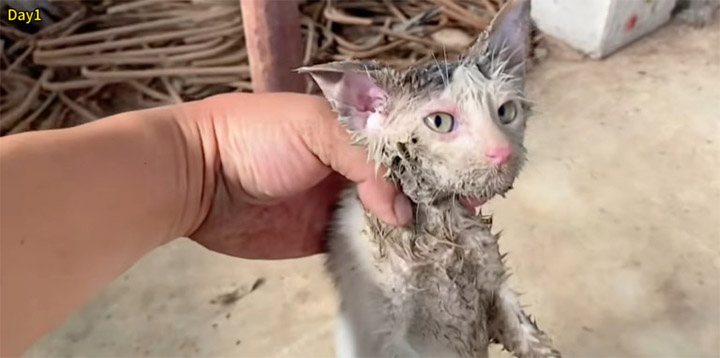
The kitten’s body moved.
Only slightly at first, but enough to show that the opening had become wide enough.
The man paused, repositioned himself, and made one final careful attempt.
With a gentle pull, the tiny body slipped free.
For a moment, neither of them moved.
Then the kitten let out a loud cry, almost as though it were announcing to the world that it had finally escaped. Its body was dirty and exhausted, but it was free. After spending so long trapped inside the drainage hole, the kitten immediately scrambled toward a safer area, disappearing for a short while as though instinctively needing distance from the frightening experience it had just survived.
The man watched it go, relieved that the rescue had succeeded.
He probably thought that was the end of the story.
It wasn’t.
That evening, something unexpected happened.
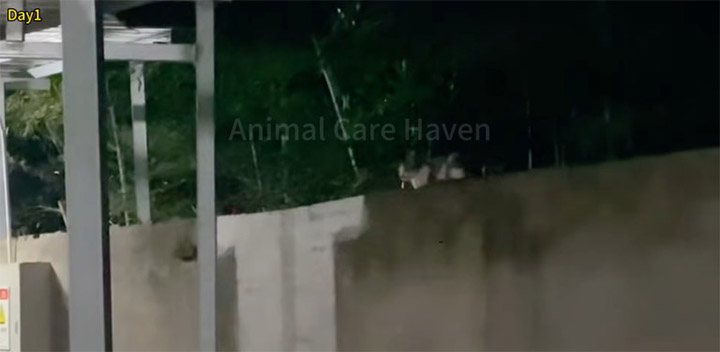
As he returned to his workplace, he noticed several cats nearby. Among them was an adult female and the rest of her litter. They remained at a cautious distance, watching him carefully. The mother cat did not approach directly, but she did not run away either. Instead, she stood there with her kittens close by, observing the person who had spent hours freeing one of her babies.
It was impossible to know exactly what she understood.
Animal behavior experts are careful about interpreting human emotions into animal actions, and there is no way to prove that the mother cat had consciously returned to “say thank you.” Yet her willingness to remain nearby was meaningful in another way. She was beginning to recognize that this particular human did not represent a threat.
The man began leaving food and water for the family.
At first, they kept their distance.
The mother would wait until he moved away before approaching the food, while the kittens watched from behind whatever shelter they could find. Trust is rarely immediate for stray cats, particularly when they have spent their lives avoiding humans. Their survival depends on caution, and they must learn through repeated experiences that a person is safe.
So he gave them time.
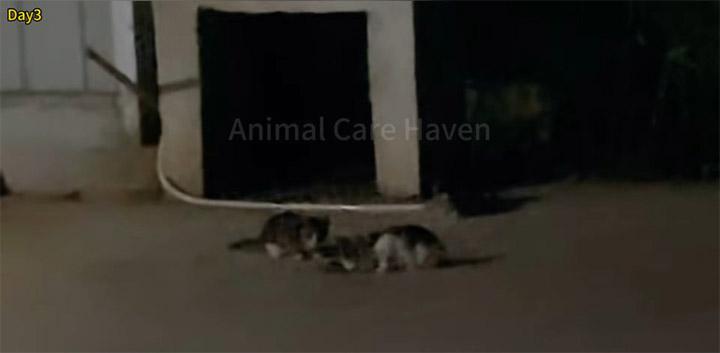
Day after day, he continued leaving food without forcing contact. Gradually, the cats began coming closer.
Weeks passed, and the transformation became remarkable.
The kittens that had once hidden whenever a human appeared began exploring the warehouse surroundings with growing confidence. Tiny paws could suddenly be heard running across the floor, climbing over safe objects, and chasing one another through the spaces where they had once been too frightened to emerge.
The rescued kitten seemed particularly attached to the man.
Whenever he was working, the little cat would often remain nearby, watching him quietly or sitting at a comfortable distance. There was no dramatic gesture that proved the kitten remembered exactly what had happened, but the growing trust between them was unmistakable. The animal that had once cried desperately from inside a drainage hole now appeared comfortable enough to share the man’s space.
The warehouse itself seemed to change.
What had once been a quiet place filled only with the sounds of work became a small world of curious kittens, gentle footsteps, playful chases, and occasional meows. Their presence brought an unexpected warmth to the environment, turning an ordinary workplace into somewhere that felt alive in a completely different way.
For the man, the experience became much more than a rescue.
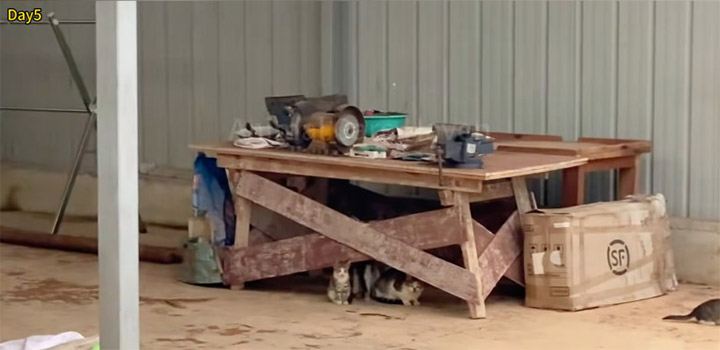
He had originally stopped because he heard a cry.
He had no idea that following that sound would eventually lead to a relationship built on trust and companionship. He had simply seen a vulnerable animal in trouble and decided that its life was worth the time and effort required to save it.
That decision created a ripple effect.
One kitten was freed from a drainage hole.
A family gained access to regular food and water.
A frightened group of stray cats slowly learned that at least one human could be trusted.
And one person discovered that compassion can return in ways that are impossible to predict.
From an animal welfare perspective, the story also highlights an important truth about stray cats. Trust cannot be demanded, and affection cannot be forced. The most effective way to build a relationship with a frightened animal is often through consistency, patience, food, safety, and respect for its boundaries. The man never chased the cats or tried to force them into his arms. He simply continued showing them, day after day, that his presence could mean something good.
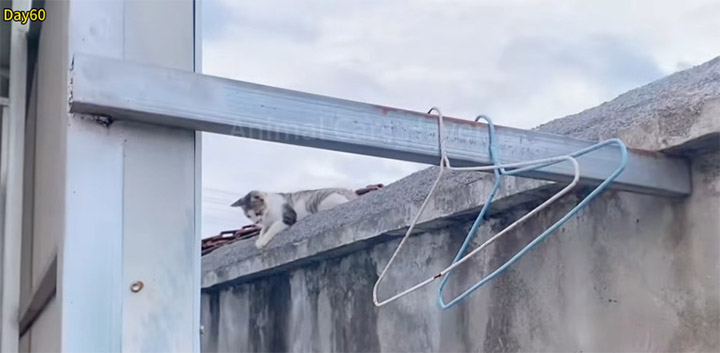
Eventually, they made the decision to come closer on their own.
Perhaps that is what made the bond so special.
The kitten had once needed a human to save its life.
Later, that same kitten became a small source of companionship for the person who had rescued it.
It is easy to believe that kindness is something we give away without expecting anything in return. Yet experiences like this remind us that compassion often changes the giver as much as it changes the recipient. Saving a frightened animal can bring a sense of purpose, connection, and warmth that remains long after the emergency has passed.
The kitten’s life was changed because one person chose to listen.
A faint cry could easily have been ignored beneath the noise of the warehouse. The man could have continued working, assuming the sound would disappear. Instead, he stopped, investigated, and followed it until he found the creature desperately calling for help.
That single decision created an entirely different future.
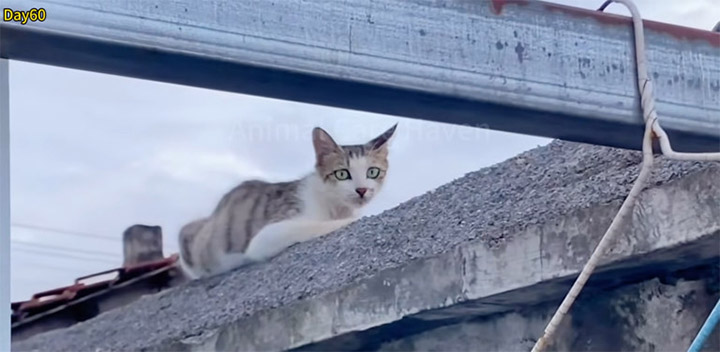
The kitten was no longer trapped.
It was no longer alone.
And somewhere around that warehouse, among the sound of tiny paws and playful meows, a bond was quietly being formed.
Sometimes, we believe we are rescuing an animal because it needs us.
But there are moments when the truth feels much more complicated and beautiful.
We save them from danger, give them a little food, offer them a safe place to exist, and somehow they give something back that cannot be measured.
They remind us to slow down.
They teach us patience.
They show us that trust can grow from the smallest acts of kindness.
And sometimes, without ever intending to, they become part of our lives.
For one tiny kitten, a desperate cry led to freedom.
For one compassionate human, that rescue led to a friendship he never expected.
And perhaps that is the quiet magic of kindness: you may begin by saving a life, only to discover that the life you saved has found a way to touch your own.
Watch the video below:


