
Some rescue stories begin with a moment of heartbreak, but every once in a while, that heartbreak becomes the first chapter of something unexpectedly beautiful. MiMi’s story began with an urgent distress call about a tiny kitten who had fallen from a balcony and suffered a devastating injury to one of her eyes. At only six weeks old, she was still at an age when she should have been discovering the world through play, learning to trust gentle hands, and staying close to the warmth of her mother. Instead, she was frightened, injured, and facing a future that suddenly looked uncertain.
When rescuers arrived, they immediately understood that MiMi needed professional veterinary attention. Her right eye had suffered severe trauma, and the damage was too extensive to heal on its own. For such a young kitten, injuries of this nature can become dangerous very quickly, particularly when pain, infection, and stress are added to an already fragile body. The veterinary team knew there was little time to waste, and after carefully assessing her condition, they determined that removing the damaged eye was the safest option for protecting her health and giving her the opportunity to recover.
For anyone looking at MiMi for the first time, the procedure was understandably heartbreaking. Losing an eye is a significant physical change, especially for an animal so young, and it is natural for people to wonder how a kitten will adapt afterward. Yet veterinarians also know something important about cats: they are remarkably adaptable animals. Their world is built from much more than vision alone. They rely heavily on hearing, smell, touch, whisker sensitivity, memory, and an extraordinary ability to learn the layout of their surroundings. With appropriate care, many cats with one eye go on to live completely fulfilling lives.
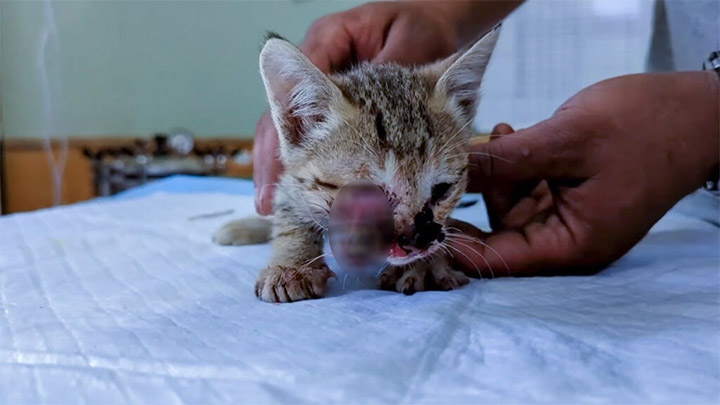
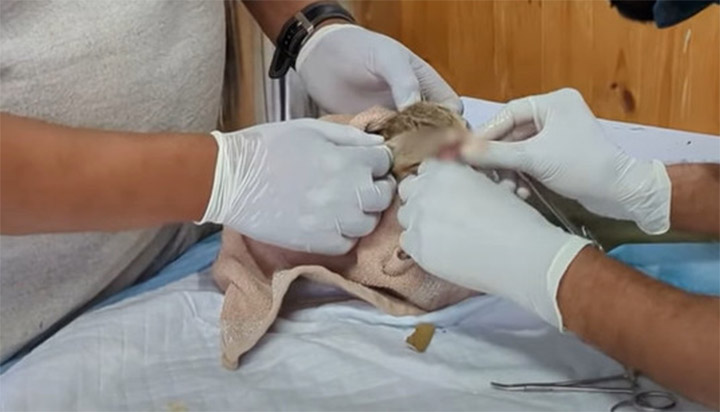
MiMi’s surgery was performed as quickly and carefully as possible, with the primary goal of eliminating the damaged tissue, controlling pain, and preventing further complications. The operation itself was only one part of the challenge, because the recovery period would determine how well the tiny kitten adjusted to her new circumstances. Everyone at the shelter hoped she would respond well, but no one could have predicted just how quickly MiMi would reveal her extraordinary personality.
The very next day, something happened that left her caregivers amazed.
MiMi was standing on her paws.
Instead of remaining frightened and motionless after surgery, she began cautiously moving around her enclosure, investigating the unfamiliar surroundings with the curiosity of a kitten who had already decided that the world was still worth exploring. Her movements were naturally careful at first, but she showed no interest in feeling sorry for herself. Before long, she was purring, seeking attention, and responding to the people who came to check on her.
From a veterinary perspective, this kind of behavior is encouraging for several reasons. A recovering animal that begins eating, grooming, interacting, and exploring is often demonstrating that pain and stress are becoming manageable. MiMi seemed to possess all of those positive signs remarkably early in her recovery, and her affectionate personality quickly became impossible for the shelter staff to ignore.
She did not behave like a kitten who believed she was damaged.
She behaved like a kitten who had places to go and adventures waiting for her.
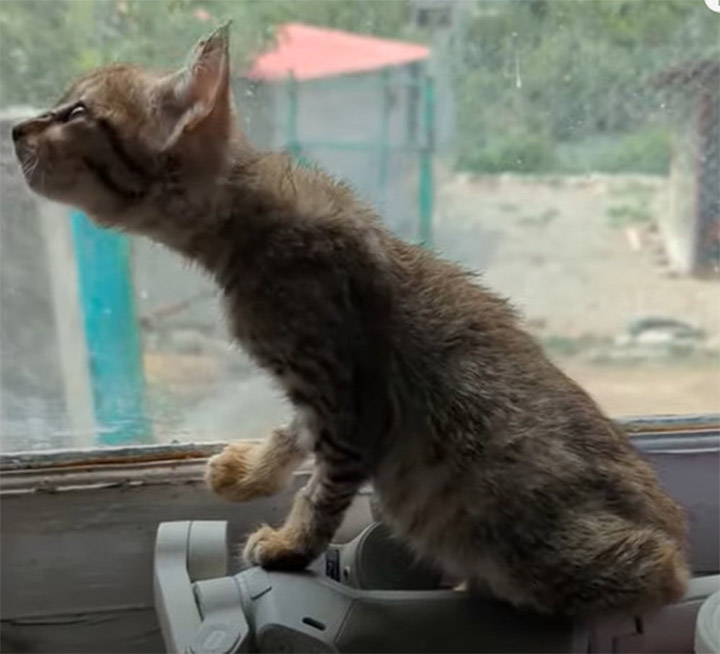
As her physical recovery progressed, MiMi became increasingly playful. She discovered toys and began chasing them around the shelter, sometimes turning ordinary objects into sources of entertainment. She climbed onto laps whenever someone offered her attention and seemed particularly fond of being close to people. Her affectionate nature was striking because she had every reason to be cautious after such a frightening experience, yet instead of becoming withdrawn, she seemed determined to connect with the people around her.
There was something deeply moving about watching her adapt.
MiMi had lost one of her eyes, but she had not lost her ability to experience the world with enthusiasm. She learned to judge distances differently, became more familiar with her surroundings, and gradually moved with the confidence of a kitten who understood that her body was capable of much more than her injury suggested.
Her caregivers also took steps to make her environment comfortable and predictable. Keeping her surroundings safe and allowing her time to learn where objects were located helped her develop confidence while reducing the risk of further accidents. This kind of environmental support is particularly important for animals adjusting to changes in vision because familiarity allows them to rely more effectively on their remaining senses.
And MiMi learned quickly.
Within weeks, she had transformed from a frightened kitten recovering from emergency surgery into one of the shelter’s most energetic little personalities. Her playful antics brought smiles to people who had initially worried about whether she would survive. She would chase toys, investigate new objects, climb onto available laps, and then settle down for affection as though she had never experienced anything frightening at all.
For the people caring for her, this transformation became a reminder that an injury does not necessarily determine an animal’s quality of life.
What matters is how that animal is supported afterward.
MiMi’s story also challenged a common misconception about animals with disabilities. Some people hesitate to adopt cats with physical differences because they assume these animals will require constant assistance or will be unable to enjoy normal activities. In reality, cats can adapt remarkably well to many forms of disability, and MiMi demonstrated that adaptability every day.
She did not need anyone to convince her that she could still have fun.
She simply started living.
Eventually, the attention MiMi attracted at the shelter reached a local family who came to meet her. They were initially drawn to her story, but it did not take long for them to fall in love with the kitten herself. What they saw was not a broken animal waiting to be rescued again. They saw an affectionate, playful, curious little cat with a personality much bigger than her tiny body.
The family decided to give MiMi the home she deserved.
Leaving the shelter marked another important chapter in her journey. After everything she had endured, she was finally going somewhere where she could grow up surrounded by stability, affection, and people who would never judge her by the eye she had lost.
In her new home, MiMi continued doing what she had always done best: turning ordinary moments into adventures. She explored her surroundings, played with her toys, sought out affection, and gradually settled into a routine that allowed her personality to flourish. The injury that once threatened her life became only one small part of her history rather than the defining feature of her identity.
Today, MiMi is living the kind of life that rescuers hope for whenever they answer an emergency call. She has a family who understands her needs, a safe place to sleep, plenty of opportunities to play, and people who see her for the joyful animal she is.
She may look different from other cats, but there is nothing incomplete about her life.
Her journey is an especially powerful reminder for anyone considering adoption that perfection is not a requirement for happiness. Some of the most remarkable animals carry scars, missing limbs, damaged eyes, or difficult histories, yet they can still offer extraordinary companionship and unconditional affection. What they need most is not pity, but patience, understanding, and someone willing to see beyond their physical differences.
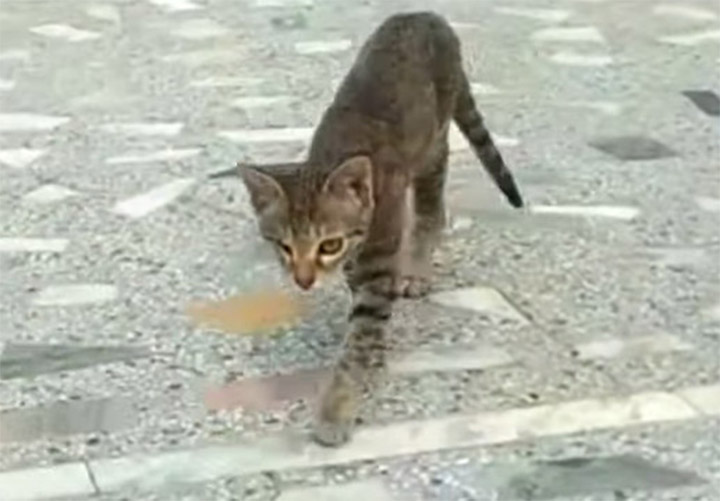
MiMi’s greatest achievement was never simply surviving her accident.
It was learning to live beyond it.
At six weeks old, she faced an injury that could easily have changed the course of her entire life. Yet emergency veterinary care gave her a second chance, and her own remarkable resilience carried her the rest of the way. She adapted, recovered, played, trusted again, and eventually found the family she had been waiting for.
Her missing eye may always remind those who know her of the accident she survived, but when MiMi looks around her home today, she is surrounded by something far more important than what she lost.
She has safety.
She has companionship.
She has love.
And most importantly, she has a future.
MiMi never allowed one painful moment to become the definition of her existence. Instead, she turned her second chance into a life filled with curiosity, affection, and joy. Her story proves that resilience does not always look powerful or dramatic. Sometimes it appears as a six-week-old kitten standing on her paws the morning after surgery, purring softly as though telling everyone around her that she is ready to keep going.
MiMi did not just survive.
She discovered that life could still be beautiful, and now she has an entire lifetime ahead of her to prove it.


